The problem nanobubble stimulation is built for.
Oil wells slow down for a few different reasons. Most of them are not depletion. The four main causes of low production on a stripper well or small-lease well are:
- Plugged perforations. Buildup in the casing perforations chokes off the path oil takes into the wellbore.
- Formation blockage. The pore throats in the producing rock get tight, slowing oil long before it reaches the well.
- Saltwater channeling. Water finds the easy path through the rock and pushes oil out of the way. Oil cut drops while total fluid stays steady.
- Depletion. Real but the smallest of the four. Most stripper wells still have plenty of oil in the formation.
Nanobubble stimulation directly addresses the first three.
How stable gas nanobubbles work in the formation.
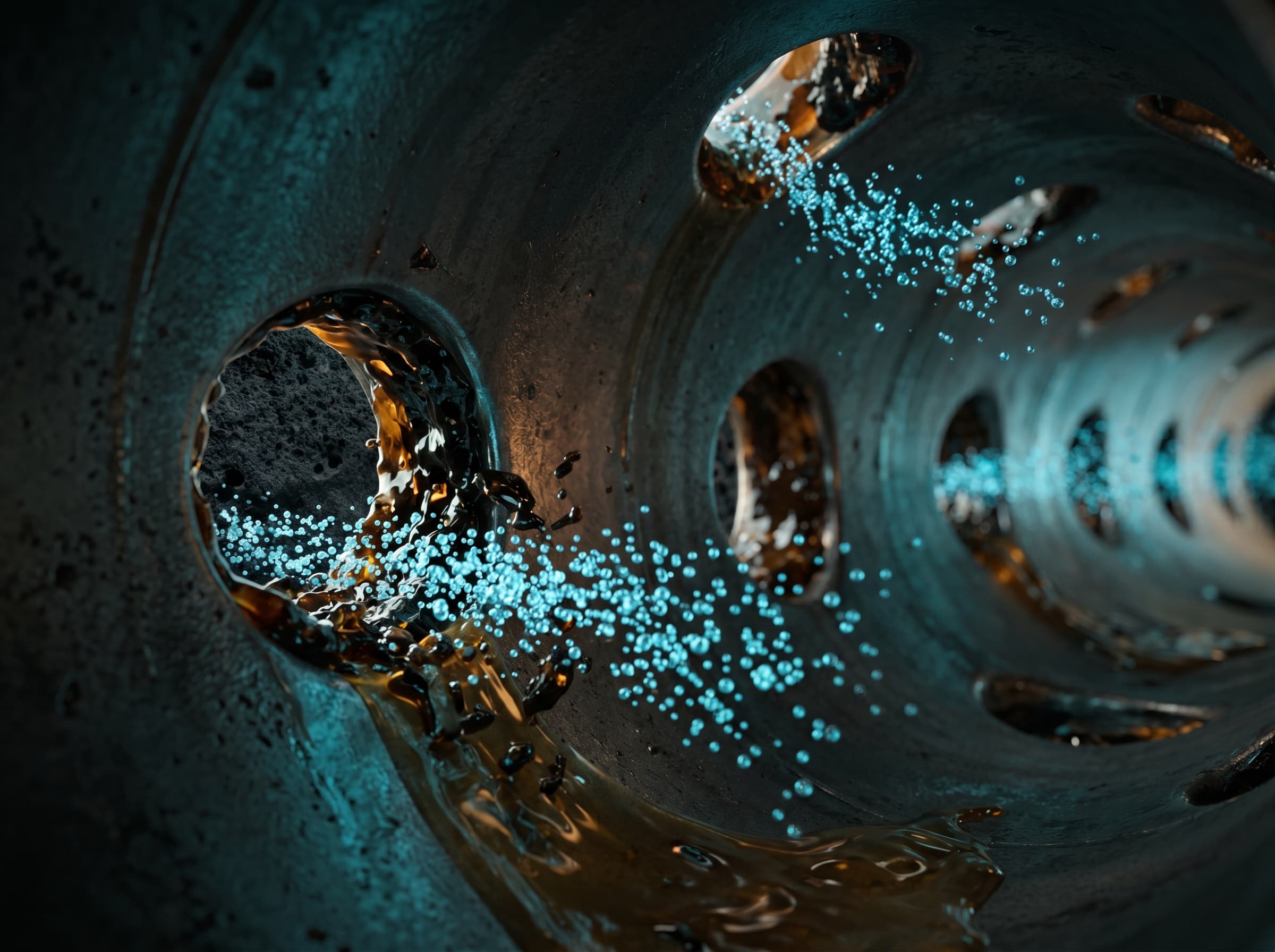
A nanobubble is a gas bubble smaller than 200 nanometers in diameter. At that size, surface chemistry dominates physics. The bubbles do not float to the top of the water. They stay suspended for weeks. They travel into pore spaces ordinary fluids cannot reach.
Two effects matter for oil production:
- Surface tension drops. Oil that was held in place by capillary forces in tight pore throats gets released. It can move toward the lower-pressure wellbore.
- Wettability shifts. The rock surface becomes less oil-loving and more water-loving. Oil films release from the rock and join the flowing fluid.
On the way through the wellbore, the same bubbles also help clear buildup off the perforations, which is why some operators describe the early effect as the well “opening up.” The perforation clearing is real but it is a side effect. The main story is the formation.
How it differs from rigs and chemical treatments.
A workover rig solves a mechanical problem at the surface and in the wellbore. It pulls rods, replaces tubing, fixes pumps. It does not address what happens out in the producing rock.
Chemical treatments use solvents and surfactants to dissolve buildup. They can work, but they are consumable, often pricey, and the operator usually has to keep buying chemistry. Boost uses gas-charged water. The bubbles do the work.
The third difference is the field setup. Boost taps into the existing wellhead, pumps the nanobubble fluid into the producing zone, measures flow before and after, and leaves with the numbers documented. No rig, no rod pull, no equipment swap.
What results to expect.
Typical lift on a candidate well is 2-4x. Wells that respond best are the ones with restricted flow, high water cut, and a functioning pumpjack. Wells that have been drilled into rock that is genuinely depleted will not respond, which is why we screen wells before quoting any work.
Whatever the result, you leave with the data. Baseline flow, post-treatment flow, water cut, oil cut. Documented on site.
If you want the field-side details — what happens on site, what the trailer brings, what we measure — read Stripper Well Stimulation. If you operate in the Ardmore Basin or southern Anadarko shelf, see Southern Oklahoma Services.